

PART I — Learning How to Work With AI
Book 1
The First Step Is the Hardest
AI can seem intimidating when you don't know what to ask, whether you need technical knowledge, or whether you're somehow expected to understand everything before you begin.
You don't.
You Don't Have to Know Everything Before You Begin
Every major technology begins as something unfamiliar. AI is no different.
This chapter begins with a question: What is actually different about AI?
Drawing on a lifetime of experience with computers and changing technology, the chapter looks at several moments when computing became easier, more capable, or changed where the work took place.
Those experiences lead to a larger observation about AI: it can organize information, explain ideas in different ways, question assumptions, present competing viewpoints, and help us explore alternatives. And we can talk back to it.
The Conversation Can Continue
One of the most interesting differences with AI is that you can continue the conversation.
You can say:
“That's too complicated.”
“Give me an example.”
“What am I missing?”
“Make the argument against your own recommendation.”
“What assumptions are you making?”
“Show me another way to look at this.”The answer can become the beginning of the next question.
The second question may be where the real learning begins.
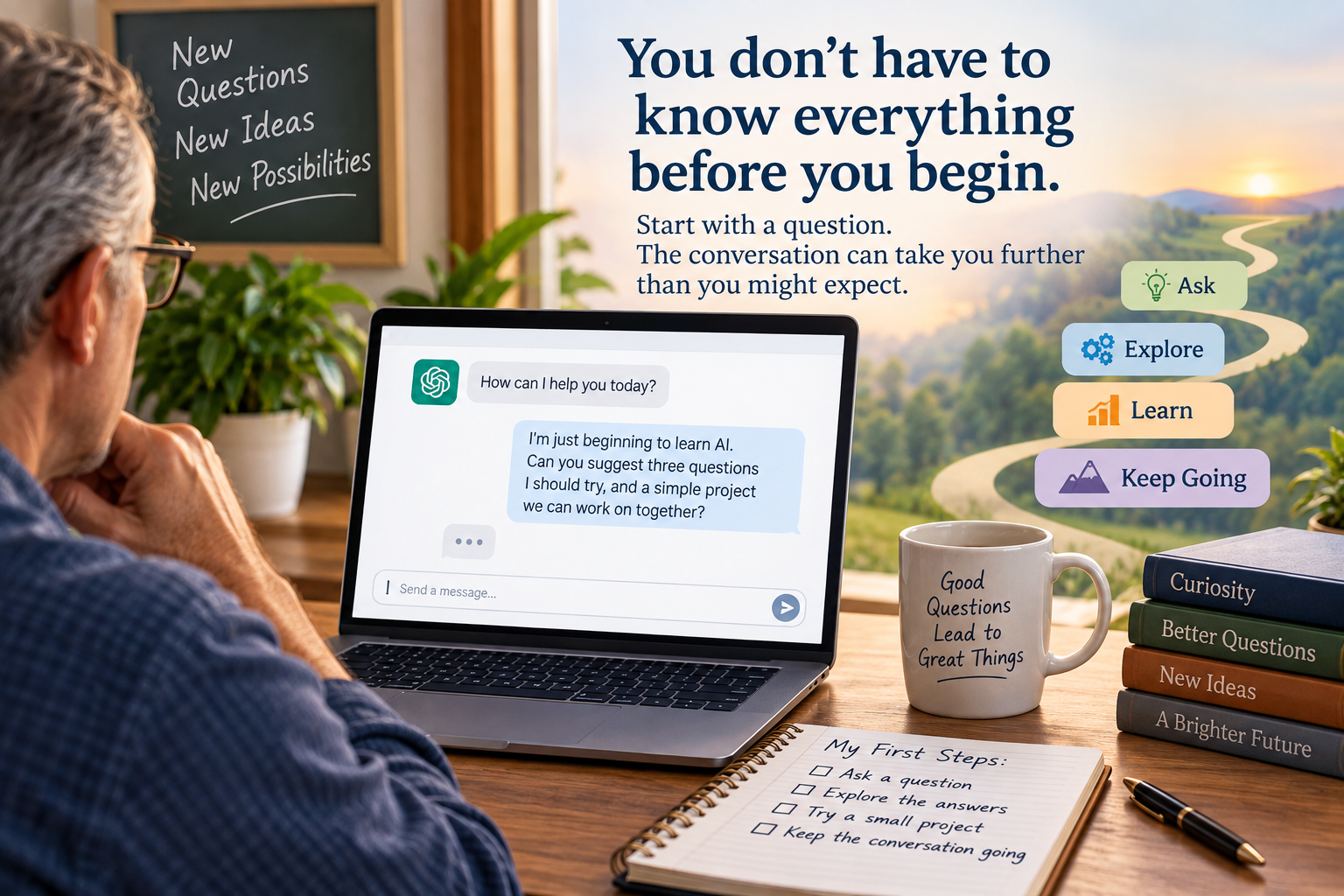
What you'll take away:
Start with curiosity
You don't need to become an AI expert before you begin.
Ask, then ask again
The first answer can lead to a better question—and a better conversation.
Learn by using AI
Small conversations can build confidence and show you what AI can actually do.
Keep going
You don't have to know where the conversation will lead before you begin.
Try it yourself
Open your favorite AI assistant and try:
“I'm just beginning to learn AI. Ask me three questions that will help you understand my interests, then recommend one simple project we can work on together.”
You don't need to know where the conversation will go. That's the point.