

Trade-Off Analysis
A way to examine what you gain and what you give up
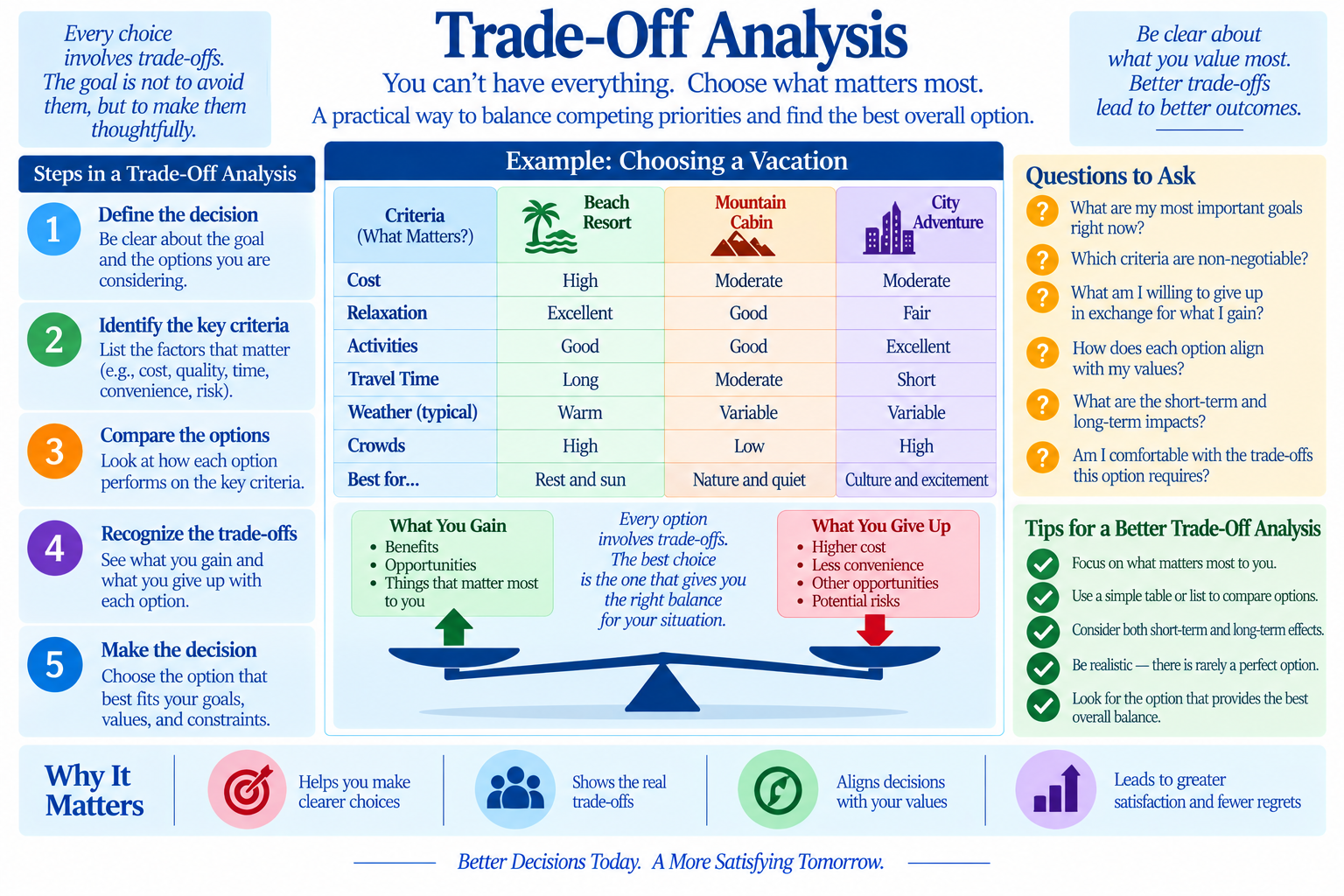
Most meaningful choices involve trade-offs. Choosing one option may give you an advantage in one area while creating a disadvantage somewhere else.
Trade-off analysis helps you make those exchanges visible. AI can help identify the competing factors, explain what each choice gives you and costs you, and point out trade-offs you may have missed.
When to use it
Use trade-off analysis when:
improving one part of a choice may make another part worse
you cannot maximize every goal at the same time
different choices involve different advantages and disadvantages
you need to decide which compromises are acceptable
you want to see what you are giving up when you choose one option
Try this with AI
Help me analyze the trade-offs involved in [decision]. Identify the most important competing factors and show what I gain and give up with each option. Identify any trade-offs I may have overlooked. Distinguish facts from assumptions and point out which trade-offs depend on information that should be verified.
Then ask a follow-up
Which trade-offs are most important to this decision? What would I have to give up to improve the factor I care about most?
You can then ask AI to examine whether a different choice, priority, or assumption would change the trade-offs.
A useful caution
A trade-off analysis does not tell you that one side of a trade-off is worth more than the other.
That depends on your goals and priorities. What looks like an unacceptable compromise to one person may be a reasonable choice for another.
Ask AI to make the trade-offs clear, but decide which compromises you are willing to accept.
Remember
Every choice can involve something you gain and something you give up. Make the trade-off visible before you decide.