

SWOT
A way to examine strengths, weaknesses, opportunities, and threats
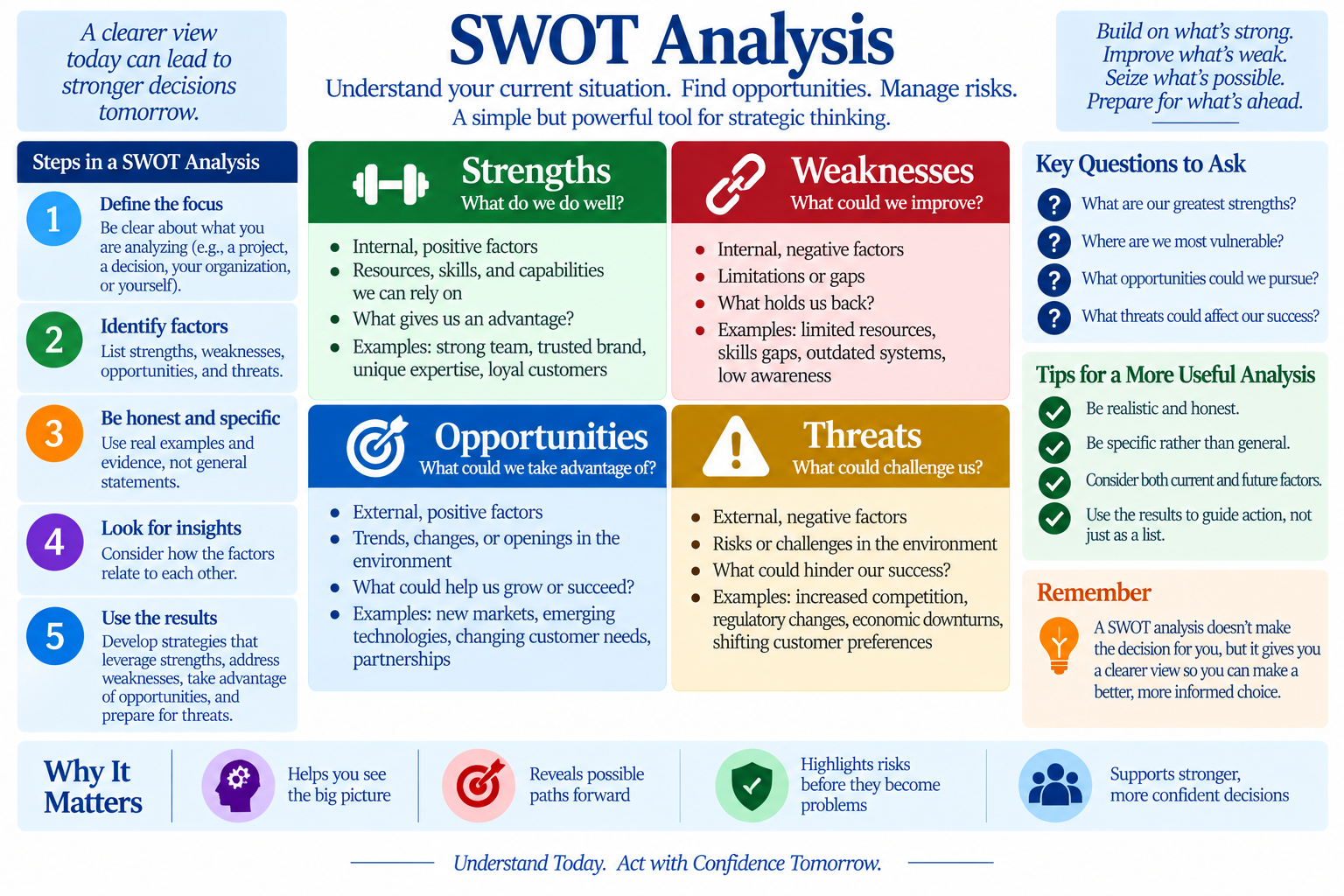
SWOT analysis gives you four categories for examining a situation:
Strengths — internal advantages
Weaknesses — internal limitations
Opportunities — external possibilities you may be able to use
Threats — external conditions that could create problems
AI can help you identify possibilities in each category, organize them, and point out areas that deserve closer examination.
When to use it
Use a SWOT analysis when:
you want a broad view of a situation
you are evaluating a project, organization, product, or plan
you want to separate internal factors from external conditions
you want to identify opportunities and risks
you need a starting point before doing a deeper analysis
Try this with AI
Help me create a SWOT analysis for [situation]. Identify the most important strengths, weaknesses, opportunities, and threats. Separate internal factors from external factors. Distinguish facts from assumptions, and identify any items that need further information or verification.
Then ask a follow-up
Which items in this SWOT analysis are most important to my decision? Which ones are uncertain, and what information would help me evaluate them?
You can then ask AI to examine one quadrant in greater detail or compare the strengths and weaknesses with the opportunities and threats.
A useful caution
A SWOT analysis can become a collection of observations rather than an analysis.
AI may put something in the wrong category or produce a long list without showing which items matter most. Some factors may fit more than one category, depending on the situation.
Ask AI to explain why it placed an item in a particular category. Then decide whether the classification makes sense.
Remember
SWOT gives you a structured view of a situation. It is a starting point for thinking, not a final assessment.