

Second-Order Effects
A way to look beyond the immediate results of a decision
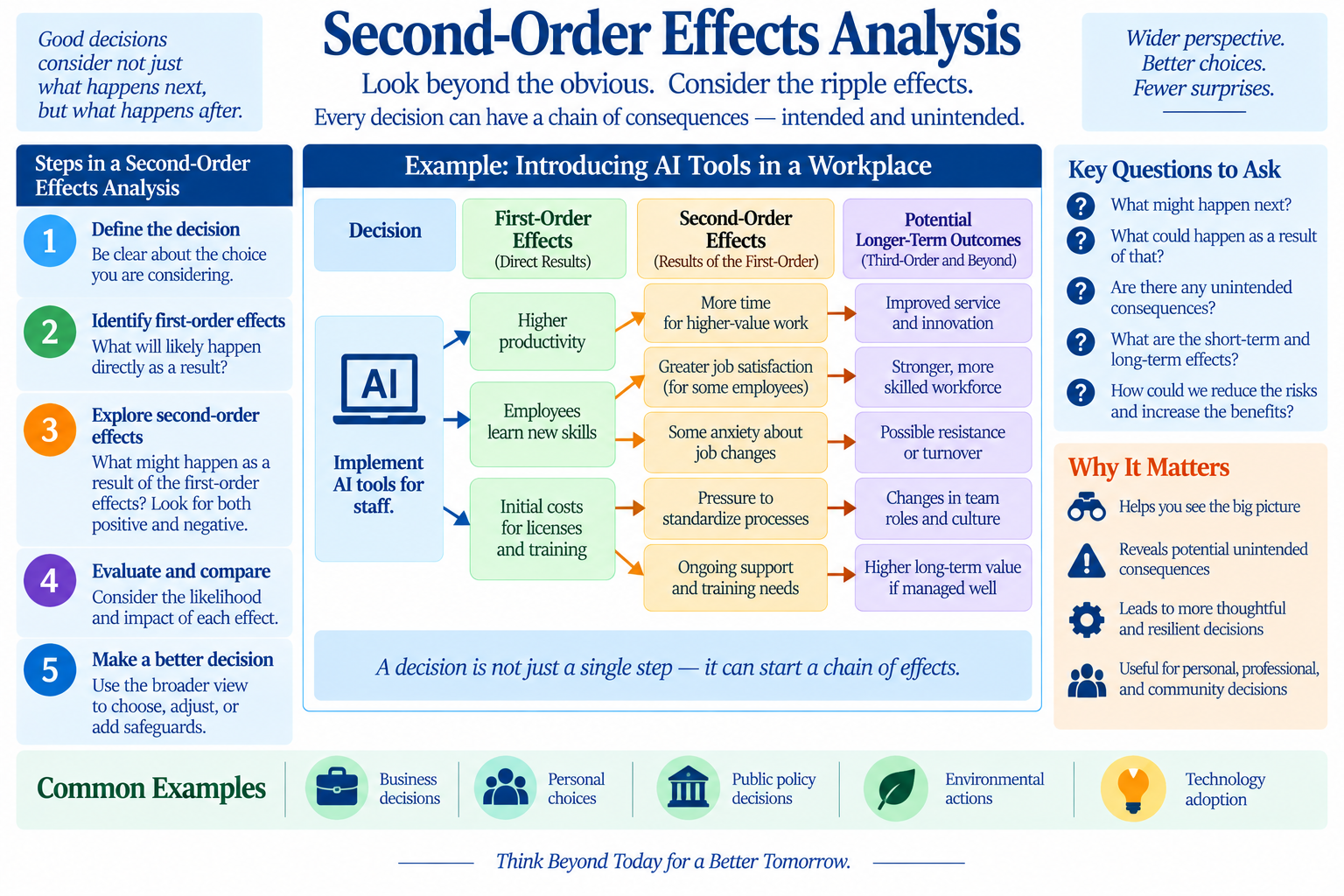
A decision can produce consequences that appear later or affect something else. These are second-order effects.
The first-order effect is what happens directly after a choice. A second-order effect is what may happen as a result of that first consequence. The chain can continue beyond that.
AI can help you look for consequences that are easy to miss, examine how different effects might connect, and question assumptions about what happens next.
When to use it
Use second-order effects analysis when:
a decision could affect several areas of your life or work
the immediate result may lead to later consequences
one change could create additional changes
you are making a decision with long-term effects
you want to examine unintended consequences
Try this with AI
Analyze the first- and second-order effects of [decision, action, or change]. Start with the most likely immediate consequences. Then trace what could happen as a result of those consequences. Identify effects that could occur later, affect other people or areas, or create unintended consequences. Separate known facts from assumptions and identify which important assumptions should be verified.
Then ask a follow-up
Which second-order effects are most significant or uncertain? Which could change my decision, and what information would help me evaluate them?
You can then ask AI to trace one consequence further and examine possible third-order effects.
A useful caution
Second-order effects are possibilities, not predictions.
AI can create long chains of consequences that sound reasonable but have little evidence behind them. The farther a chain extends, the more assumptions it may contain.
Ask AI to identify the assumptions at each step. Give greater attention to consequences supported by evidence or a clear causal connection.
Remember
Look beyond what happens first. A useful decision considers what that first result may cause next.