

Pre-Mortem
A way to look for problems before they happen
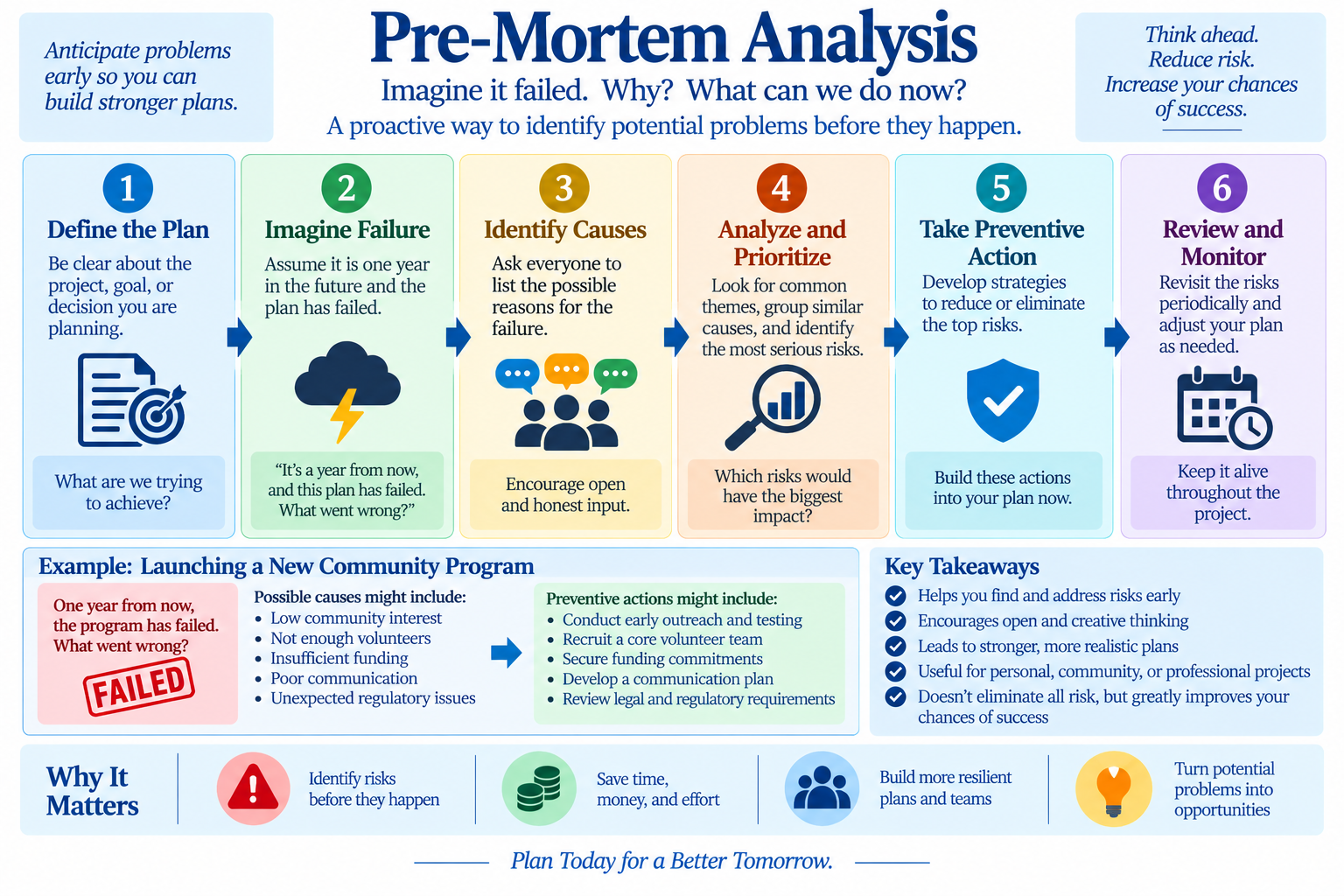
A pre-mortem asks you to assume that a plan has failed and then work backward to ask what might have gone wrong.
It can reveal risks that are easy to overlook when you are focused on making a plan succeed. AI can help you identify possible failure points, question assumptions, and suggest risks you may not have considered.
When to use it
Use a pre-mortem when:
you are considering an important decision or plan
the consequences of failure would matter
you want to identify risks before committing
you want to challenge a plan that currently looks reasonable
you want to hear concerns you may have overlooked
Try this with AI
Assume that [plan, decision, or project] has failed six months from now. Conduct a pre-mortem. Identify the most plausible reasons for the failure, including problems with assumptions, resources, timing, people, implementation, external conditions, and unexpected consequences. Separate risks that are supported by known information from risks that are speculative. Rank the risks by likely impact and likelihood.
Then ask a follow-up
Which of these risks should I address before moving forward? Which assumptions should I test first, and what information would help me reduce the greatest risks?
You can then ask AI to suggest preventive actions for the most important risks.
A useful caution
A pre-mortem is a way to look for possible failure. It does not tell you that the plan will fail.
AI may produce dramatic or unlikely failure scenarios simply because they are possible. It may miss a risk that an experienced person would recognize.
Ask AI to distinguish plausible risks from remote possibilities. Then decide which risks deserve your attention.
Remember
A pre-mortem helps you find problems before you commit to a plan. It does not predict the future.