

Decision Matrix
A structured way to compare several choices
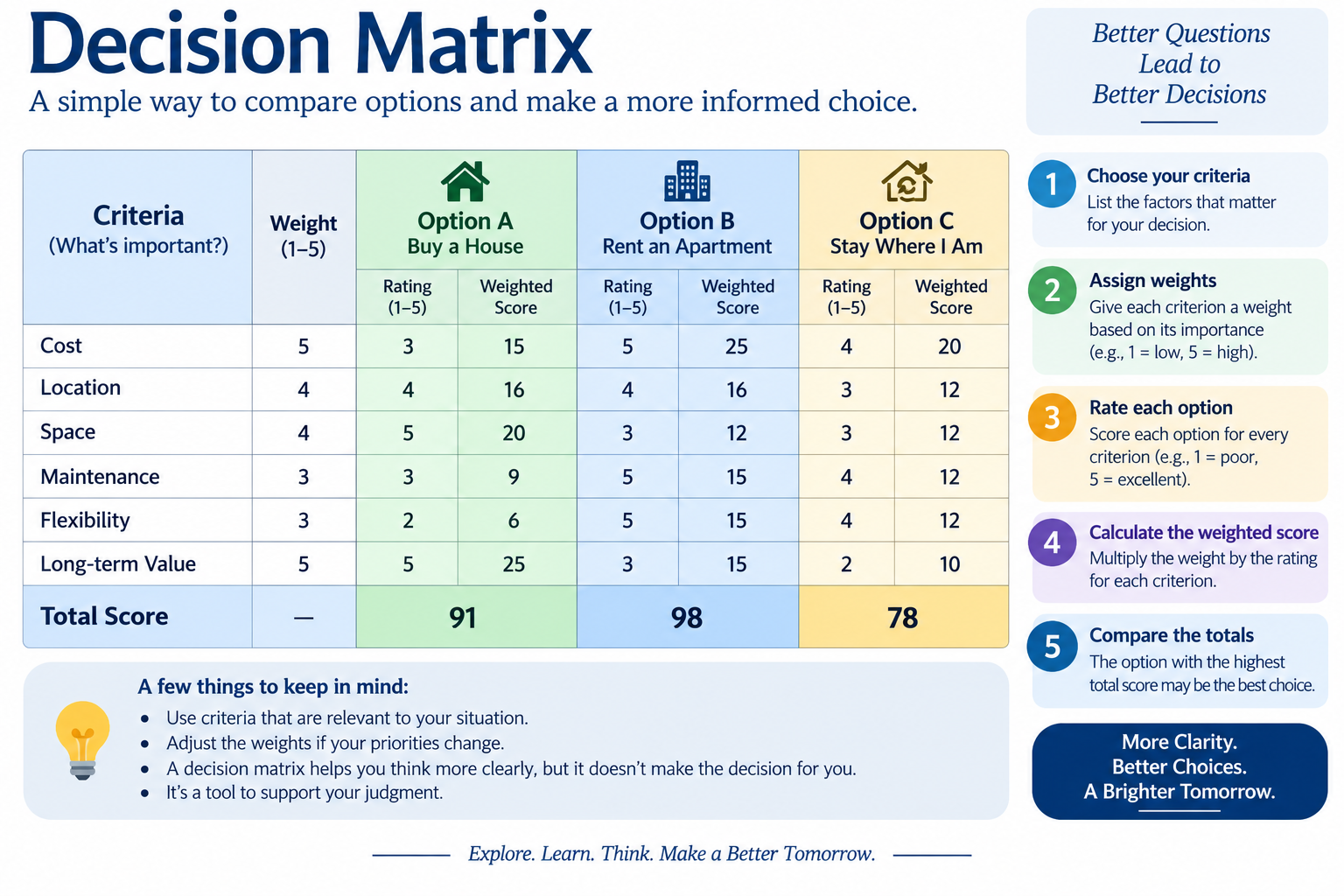
A decision matrix helps you compare options using the same set of criteria. It is useful when several factors matter and you want to see how the choices compare.
AI can help you identify useful criteria, organize the alternatives, and build the matrix. You decide which criteria matter, how much each matters, and whether the scores make sense.
When to use it
Use a decision matrix when:
you have several choices to compare
different factors matter to the decision
some factors matter more than others
you want a more structured comparison than a simple pros-and-cons list
you want to make your assumptions visible
Try this with AI
Help me build a decision matrix for [decision]. Start by identifying the choices and the criteria that should matter. Ask me which criteria are most important and help me assign weights. Then score each option against the criteria, explain the reasoning behind the scores, and show me the results. Identify any scores that depend heavily on assumptions or information that should be verified.
Then ask a follow-up
Which criteria have the greatest effect on the result? Show me how the ranking would change if I changed the weights or scores.
This is especially useful when two choices are close. A small change in your assumptions can sometimes change the result.
A useful caution
A decision matrix can give a decision a very precise-looking score without making the underlying judgment precise.
The weights and scores are choices. AI may help you assign them, but that does not make them objective facts.
Ask AI to show you which assumptions have the greatest effect on the result. Then decide whether those assumptions are reasonable.
Remember
A decision matrix organizes your judgment. It does not replace it.